The pharmaceutical industry is undergoing a significant change in how it creates complex molecules, with non-noble-metal catalysis emerging as a powerful tool in process chemistry.
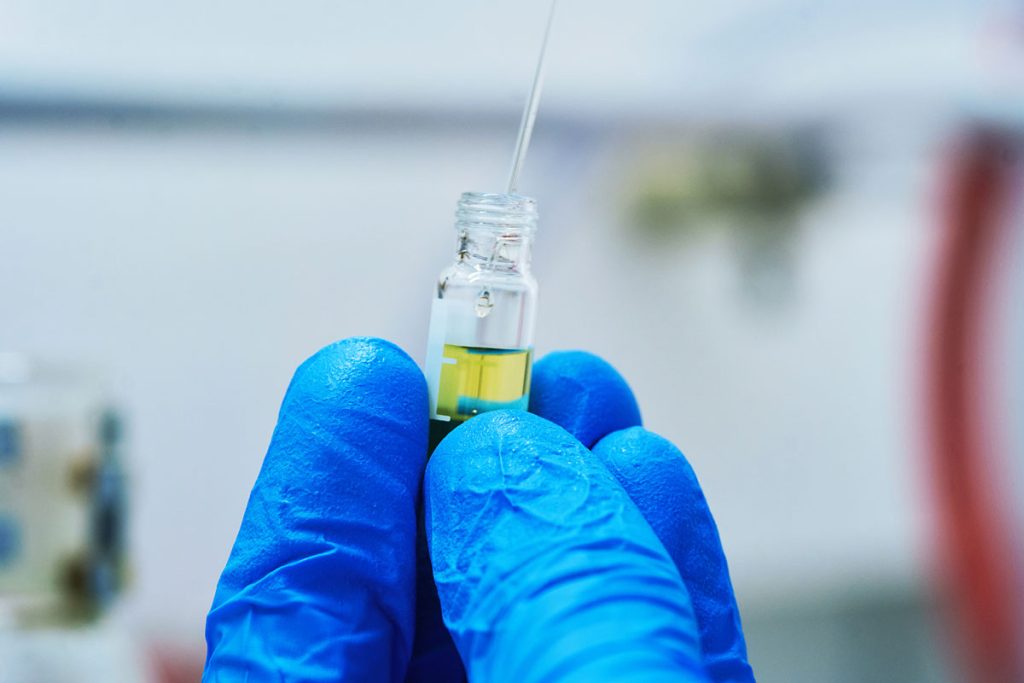
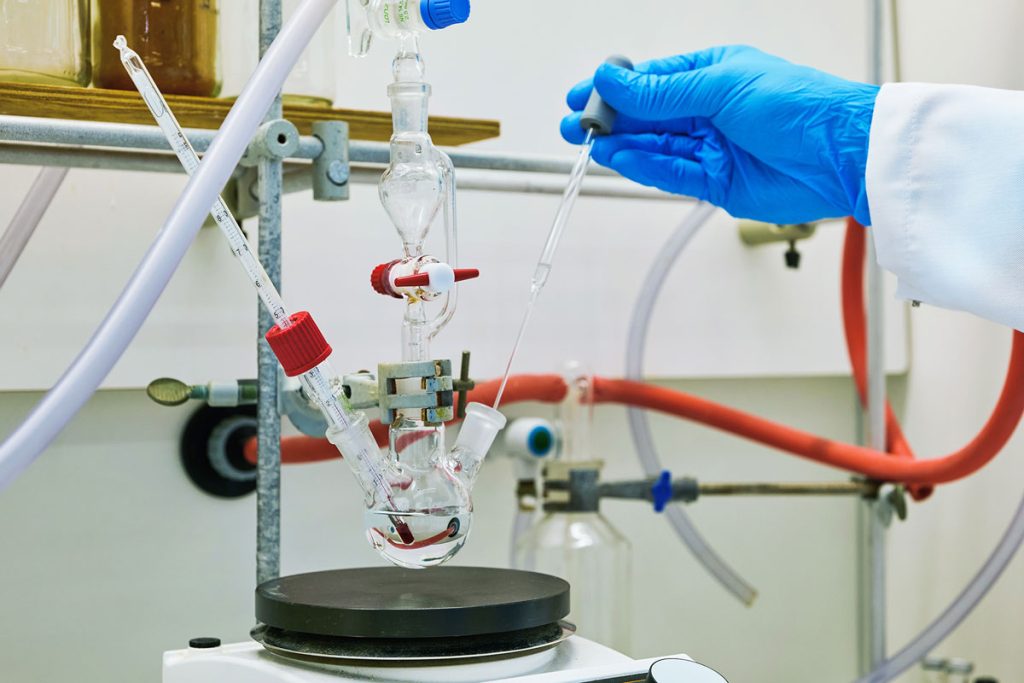
Copper-catalyzed cross-coupling reactions (Ullmann-type reactions) are increasingly replacing the well-established palladium-catalyzed alternatives in process chemistry projects at Symeres. Copper, as a catalyst in pharmaceutical synthesis, is considered 30 times less toxic than palladium, according to ICH guidelines,² providing a safer and more sustainable alternative for drug-manufacturing processes due to its lower environmental impact and cost-effective abundance.¹ Additionally, copper catalysis enables the synthesis of valuable compounds without sacrificing reaction efficiency.¹
Our experience in overcoming scaleup challenges and harnessing the benefits of non-noble-metal catalysis makes Symeres the CRO of choice for challenging steps, such as the Ullmann reaction. We are dedicated to enhancing the efficiency, sustainability, and cost-effectiveness of your API manufacturing processes.
- Org. Process Res. Dev. 2022, 26, 1690−1750
- https://www.ich.org/page/quality-guidelines
Gated content
Experience a deeper understanding of this content by completing the form below.
Resources we think you'll love
Blog
When a clean PK profile is actually a warning sign
Blog
CDMO red flags you can’t ignore: Communication breakdowns
Blog

CDMO red flags you can’t ignore: Capacity constraints and resource stretch
Blog
CDMO red flags you can’t ignore: Regulatory shortfalls and misalignment
Whitepaper
5 CDMO red flags you can’t ignore: A guide for biotechs and pharma
Blog
CDMO red flags you can’t ignore: Underestimating technology transfer complexity
Blog
O.N.E Symeres: A practical approach to real-world drug development
Blog
CDMO red flags you can’t ignore: Undefined or shifting project scope
Whitepaper
Accelerating chemical innovation: Unveiling Symeres’ parallel chemistry
Webinar | On-demand

From racemic to pure the art and science of enantiomer separation
Whitepaper
IND & IMPD enabling developability roadmap
Whitepaper
Innovations in unnatural amino acids: Advancing functional diversity and applications
Whitepaper
Managing nitrosamines in the pharmaceutical industry: A comprehensive approach
Whitepaper
Optimizing solid-state properties and enhancing API bioavailability through physicochemical prediction
Whitepaper

Stable isotope-labeled compounds
Whitepaper
Unlocking the potential of high-throughput screening: Symegold library design and expansion insights
Interviews
Insights into drug discovery and development 2025
Interviews
Interview with the computer-aided drug design (CADD) department
Interviews

Meet the Organix Director, Mario Gonzalez
Interviews

Interview with the new Managing Director of Symeres Groningen
Interviews
An interview with Yadan Chen and Paul O’Shea
Interviews

An interview with Anu Mahadevan and Paul Blundell
Blog
Crystalline and liquid crystalline 25-hydroxy-cholest-5-en-3-sulfate sodium and methods for preparing same
Webinar | On-demand
In vivo pharmacokinetic experiments in preclinical drug development
Webinar | On-demand
Accelerating medicinal chemistry by rapid analoging
Webinar | On-demand
Solid-state chemistry part II: Optimal form selection by controlled crystallization
Webinar | On-demand
Route scouting for kilogram-scale manufacturing of APIs
Webinar | On-demand
Solid-state chemistry part I: Introduction

Speak with our experts
Let’s discuss how Symeres can support the discovery and development of your next breakthrough