Part 2: Why “Scale-Up” Isn’t Just a Bigger Batch
Transitioning a process from discovery scale to GMP manufacturing is almost never straightforward. What runs smoothly at 100 milligrams in the lab can behave very differently at the kilogram scale. Yet too many programs falter because the complexity of this transition is underestimated or treated as a simple “copy and paste” exercise.
The Problem: Thinking Small-Scale Success Guarantees Simple Scale-Up
In discovery, reactions are tested quickly, processes are flexible, and scientists can make rapid adjustments at the bench. But once a molecule moves into GMP manufacturing, the environment changes completely.
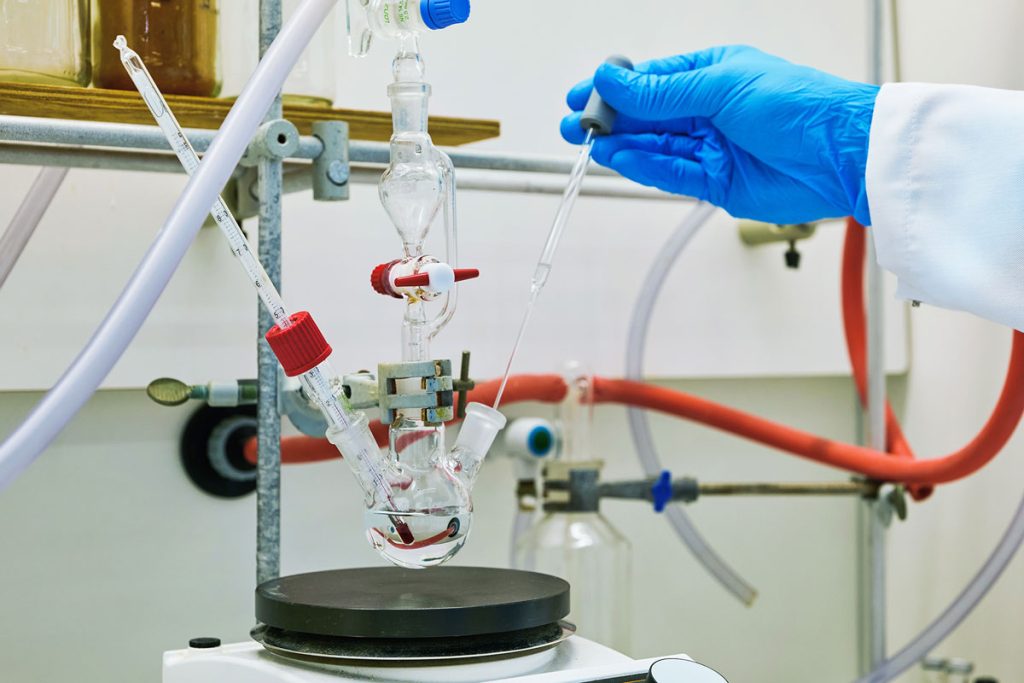
At larger scales, every parameter, from solvent recovery and reaction exotherms to impurity profiles and mixing efficiency, can shift in unpredictable ways. Processes that looked efficient at small scale can fail to deliver consistent yield, purity, or safety when scaled up.
The challenge is not only technical but cultural. Many biotechs, pharma companies, and inexperienced CDMOs assume that a strong research process will naturally translate into a manufacturing process. However, at Exemplify BioPharma, we have seen firsthand that without deliberate translation work, scale-up becomes an exercise in trial and error. And in drug development, trial and error costs time, money, and sometimes entire batches.
Why Underestimating Tech Transfer Creates Risk
Underestimating technology transfer does more than slow progress. It creates compounding risk. Each delay pushes timelines, increases cost, and can jeopardize regulatory readiness. In some cases, partners discover too late that a route must be redeveloped because critical parameters were never defined for scale.
For smaller biotech companies in particular, the financial impact of underestimating technology transfer can be significant. GMP manufacturing is one of the most expensive stages of development. A failed scale-up not only wastes material but can delay programs by months, consuming both confidence and cash flow. Smaller biotechs, in particular, often cannot absorb this disruption due to funding milestones that depend on hitting specific timelines.
How to Identify Tech Transfer Risks Before They Escalate
Before committing to a tech transfer plan, ask questions that confirm how deeply your CDMO understands the scaling process. Red flags include:
- Overly simplistic transfer plans: If the proposal assumes that existing lab notebooks or discovery protocols can be used without modification, that is a concern.
- No feasibility testing: A missing intermediate stage for small-scale engineering runs shows a lack of risk planning.
- Limited analytical foresight: If analytical method verification or validation is not included, the data may not withstand GMP scrutiny.
- No mention of material variability: Scale-up magnifies inconsistencies. If raw material variability or impurity fate is ignored, stability problems often follow.
A capable CDMO will explain how process parameters, analytical methods, and material sourcing interact across scales, and they will do so upfront during the proposal and technical scoping conversations. These details determine whether your process survives the transition from lab to plant.
How to Build a Tech Transfer Plan That Reduces Risk and Avoids Surprises
The best way to avoid scale-up surprises is to treat technology transfer as its own project, not just a final step in development.
Start by:
- Building in feasibility runs: Conduct engineering or pilot-scale studies before committing to full GMP batches.
- Integrating analytical validation: Ensure that methods are verified and suitable for scaled production, not just bench-scale work.
- Characterizing your process early: Identify critical quality attributes and define control strategies before manufacturing begins.
- Encouraging open communication: Create a shared understanding of what success means at scale, including acceptable ranges, risks, and contingency plans.
Successful tech transfer is not about over-engineering. It is about foresight and preparation. It is about identifying the gaps between research and manufacturing and bridging them through structured planning and collaboration.
Our Perspective
At Exemplify BioPharma, a Symeres company, we have supported many programs through this critical transition. Our teams have seen what happens when scale-up is treated as a simple step instead of a dedicated process, and we have helped biotech and pharma companies recover from it.
By combining process chemistry, analytical, and formulation expertise in one partnership, we ensure that development and manufacturing decisions are made together. Each scale-up plan is tested for real-world performance, giving partners confidence that what works in the lab will work in production.
Scaling up is not just about making more material. It is about maintaining integrity, reproducibility, and regulatory readiness at every level. With the right partner, technology transfer becomes a bridge to success rather than a stumbling block.
Next in the Series: Regulatory Shortfalls and Misalignment – When Technical Excellence Isn’t Enough. If you’d like to explore all five red flags in depth, fill out the form below to read our full whitepaper: 5 CDMO Red Flags You Can’t Ignore: A Guide for Biotechs and Pharma
Gated content
Experience a deeper understanding of this content by completing the form below.
Resources we think you'll love
Infographics
Map your molecule’s next move with the Symeres developability roadmap
Blog
Three Signs Your Synthetic Route Will Collapse at Scale
Blog
Lead optimization: what data actually drive decisions?
Blog
When slowing chemistry speeds programs up
Blog
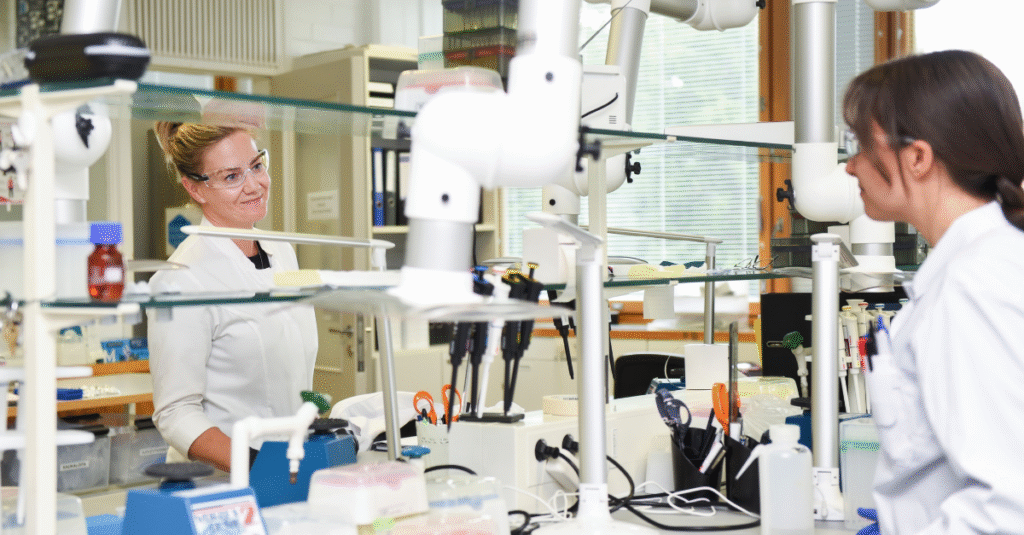
When a clean PK profile is actually a warning sign
Blog
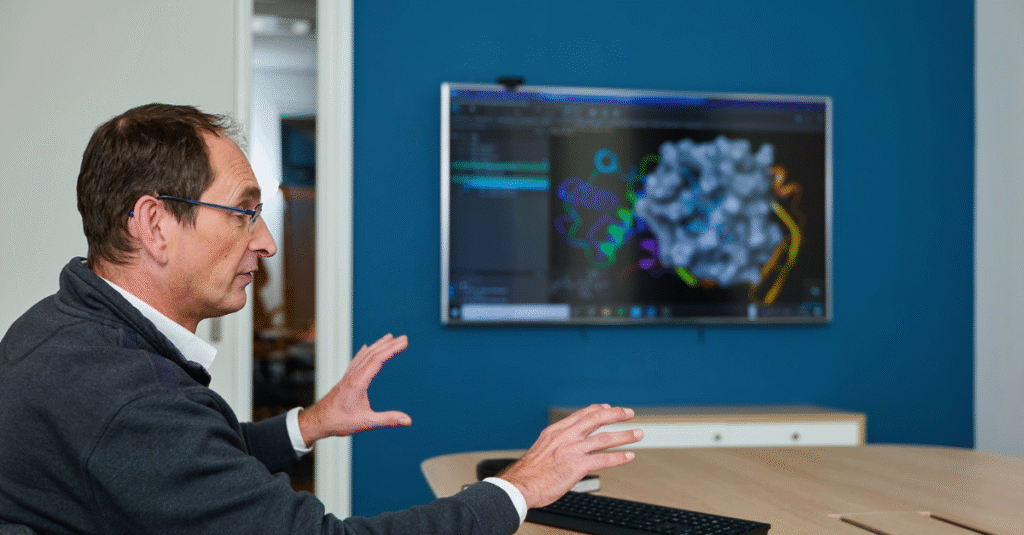
CDMO red flags you can’t ignore: Communication breakdowns
Blog

CDMO red flags you can’t ignore: Capacity constraints and resource stretch
Blog
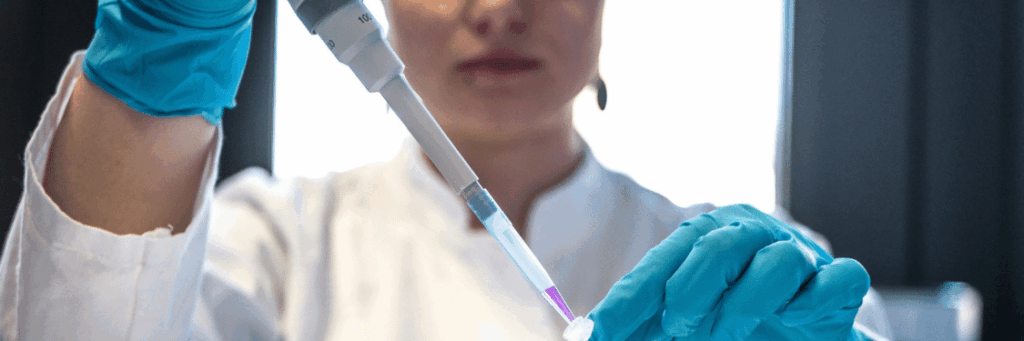
CDMO red flags you can’t ignore: Regulatory shortfalls and misalignment
Whitepaper
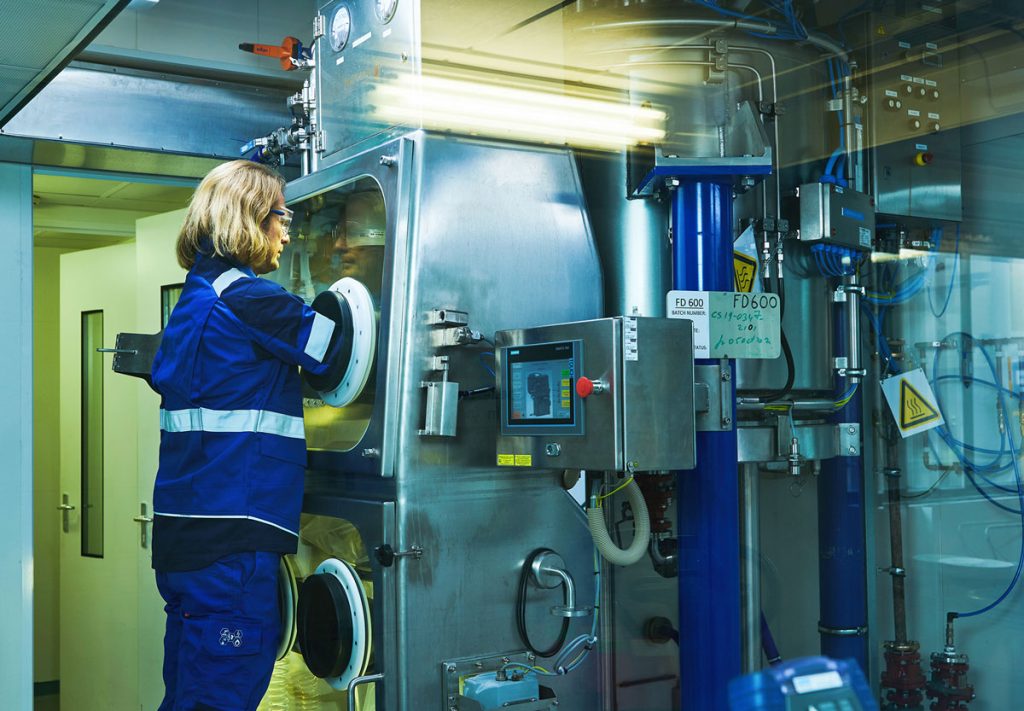
5 CDMO red flags you can’t ignore: A guide for biotechs and pharma
Blog
O.N.E Symeres: A practical approach to real-world drug development
Blog
CDMO red flags you can’t ignore: Undefined or shifting project scope
Whitepaper
Accelerating chemical innovation: Unveiling Symeres’ parallel chemistry
Webinar | On-demand

From racemic to pure the art and science of enantiomer separation
Whitepaper
IND & IMPD enabling developability roadmap
Whitepaper
Innovations in unnatural amino acids: Advancing functional diversity and applications
Whitepaper
Leveraging copper-catalyzed ullmann-type cross-coupling reactions in PR&D
Whitepaper
Managing nitrosamines in the pharmaceutical industry: A comprehensive approach
Whitepaper
Optimizing solid-state properties and enhancing API bioavailability through physicochemical prediction
Whitepaper

Stable isotope-labeled compounds
Whitepaper
Unlocking the potential of high-throughput screening: Symegold library design and expansion insights
Interviews
Insights into drug discovery and development 2025
Interviews
Interview with the computer-aided drug design (CADD) department
Interviews

Meet the Organix Director, Mario Gonzalez
Interviews
Interview with the new Managing Director of Symeres Groningen
Interviews
An interview with Yadan Chen and Paul O’Shea
Interviews

An interview with Anu Mahadevan and Paul Blundell
Blog
Crystalline and liquid crystalline 25-hydroxy-cholest-5-en-3-sulfate sodium and methods for preparing same
Webinar | On-demand
In vivo pharmacokinetic experiments in preclinical drug development
Webinar | On-demand
Accelerating medicinal chemistry by rapid analoging
Webinar | On-demand
Solid-state chemistry part II: Optimal form selection by controlled crystallization
Webinar | On-demand
Route scouting for kilogram-scale manufacturing of APIs
Webinar | On-demand
Solid-state chemistry part I: Introduction

Speak with our experts
Let’s discuss how Symeres can support the discovery and development of your next breakthrough