Red flags in drug development we watch for, Part 1.
A smooth pharmacokinetics (PK) curve is usually treated as a reassuring milestone. Exposure rises predictably, the clearance phase is tidy, nothing appears to misbehave and everyone’s relieved. But at Symeres, a ‘clean’ PK profile often triggers a second look rather than a celebration. Overly tidy data can mask liabilities that only appear once chemistry has advanced, assays diversify or doses increase. And when those issues surface late, they consume time, chemistry cycles and funding that teams can’t afford to waste.
Our ADME-tox and drug metabolism and DMPK scientists work side-by-side with chemists from the first in vivo screens through to IND planning. That integration means PK data is rarely interpreted in isolation. Instead, it is read against mechanism, solubility, route design, analytical behaviour and intended indication. This cross-disciplinary view is why our teams often flag concerns in PK datasets that look superficially ‘perfect’, because they’ve seen those same patterns precede downstream failure too many times.
When disappearance looks too clean
One of the earliest red flags is a concentration-time curve in which the compound disappears quickly without corresponding metabolites. On paper, this can mimic efficient clearance. Mechanistically, though, it often points elsewhere.
A steep early drop may signal analytical artefact, for example, compound loss to plasticware or adsorption to blood components. It may also indicate solubility-driven dropout in the sampling matrix or compound binding that prevents the analyte from being detected even though it remains in circulation. These scenarios create misleading exposure estimates and can distort structure-PK relationships in lead optimisation.
Symeres’ teams test these possibilities quickly because they have access to the chemistry context behind the molecule: solid-state properties, ionisation behaviour, stability in matrices and chromatographic challenges. When analytic disappearance does not match expected metabolite profiles, the PK team and chemists resolve the contradiction together – often within the same cycle of work. This is a direct expression of our integrated model, where ADME-tox, medicinal chemistry and analytical groups operate as connected units rather than sequential parts.
When the dose-exposure relationship refuses to move
A second red flag is flat exposure across dose levels – a pattern that can look elegantly proportional until it stubbornly refuses to increase. When the area under the curve (AUC) or Cmax plateaus instead of continuing to increase with higher doses, this can signal uptake transporter saturation, or other type of non‑linear pharmacokinetics emerging earlier than anticipated (1–3). If these mechanisms are not recognised promptly, teams can misinterpret the lack of response as assay noise or compound failure and redirect chemistry effort prematurely.
Because Symeres’ ADME and DMPK scientists coordinate closely, they can cross-check dose proportionality against transporter assays, microsomal stability, permeability and protein binding data. If the PK curve is too flat relative to the physicochemical profile, the group interrogates mechanism before recommending further synthesis. This prevents the familiar industry cycle in which chemists generate variants to fix a PK issue that turns out not to be structural at all.
Clients consistently cite this interpretive agility as a major strength: several noted in interviews that past CROs “couldn’t interpret their own analytical results” and often sent data packages without explaining contradictions or alternative explanations. Symeres’ openness – especially when results deviate unexpectedly – is repeatedly described as the factor that protects timelines and budgets.
When species agree too much
A third signal is minimal species differences in PK. At first glance, this looks like a win: predictable clearance across rodent models suggests smooth translation. But in practice, uniformity across species can indicate the opposite – that clearance is poorly understood and sometimes indicate a non-specific or artefactual mechanism (4).
For small-molecule programs, species variation typically provides mechanistic clues: metabolic pathway dominance, plasma stability differences or transporter contributions. When those differences vanish, Symeres scientists examine whether the compound is being degraded non-enzymatically, binding indiscriminately or potentially lost through physicochemical routes rather than metabolism. Again, the question is whether the PK curve is telling a story about the molecule or about the experiment.
Integrated teams help answer that question. Chemists contribute solubility, polymorph, stability, and formulation insights; ADME/DMPK scientists propose and test mechanistic hypotheses related to absorption, distribution, metabolism, and transport, with rapid experimental follow-up. This tight cycle allows teams to pivot immediately when data contradict assumptions, preventing weeks of follow-up studies based on misread PK behaviour.
Interpreting PK early prevents dead-ends later
PK data should never be treated as a box-checking exercise. A clean curve can hide analytical artefacts, solubility issues, non-linear kinetics or poorly understood clearance mechanisms. What differentiates Symeres is not speed of data delivery but the insistence on interpretation – the unwillingness to advance a molecule without understanding how and why it behaves.
That stance reflects our culture of openness: clients know when something looks wrong because we tell them early. It reflects nimbleness: teams adjust chemistry, dosing or analytics quickly when contradictions emerge. And it reflects expertise: decisions are made by scientists who can connect PK behaviour to chemistry, biology and chemistry, manufacturing, and controls (CMC) realities.
Interrogating PK early saves chemistry effort, prevents late-stage attrition and strengthens the rationale for every molecule that moves forward. Clean curves are welcome, but only after they’ve been challenged.
References
1. T. I. T. Consortium, K. M. Giacomini, S.-M. Huang, D. J. Tweedie, L. Z. Benet, K. L. R. Brouwer, X. Chu, A. Dahlin, R. Evers, V. Fischer, K. M. Hillgren, K. A. Hoffmaster, T. Ishikawa, D. Keppler, R. B. Kim, C. A. Lee, M. Niemi, J. W. Polli, Y. Sugiyama, P. W. Swaan, J. A. Ware, S. H. Wright, S. W. Yee, M. J. Zamek-Gliszczynski, L. Zhang, Membrane transporters in drug development. Nat. Rev. Drug Discov. 9, 215–236 (2010).
2. A. Galetin, K. L. R. Brouwer, D. Tweedie, K. Yoshida, N. Sjöstedt, L. Aleksunes, X. Chu, R. Evers, M. J. Hafey, Y. Lai, P. Matsson, A. Riselli, H. Shen, A. Sparreboom, M. V. S. Varma, J. Yang, X. Yang, S. W. Yee, M. J. Zamek-Gliszczynski, L. Zhang, K. M. Giacomini, Membrane transporters in drug development and as determinants of precision medicine. Nat. Rev. Drug Discov. 23, 255–280 (2024).
3. L. Z. Benet, B. Hoener, Changes in plasma protein binding have little clinical relevance. Clin. Pharmacol. Ther. 71, 115–121 (2002).
About the authors
Dr. Miia Kovalainen, Head of Business Development at Admescope, has over ten years of experience in academic pharmaceutical research in Finland and Australia, with special focus on physiology and pharmacology of energy metabolism and drug delivery systems for compounds with poor ADME properties. She has contributed to >25 peer reviewed research and review articles. Miia heads the ADME-Tox business development and is also involved in the client services and sales of various services, with a focus on regulatory compliant in vitro drug-drug interaction packages.

Dr. Janne Mannila, Head of in vivo Pharmacokinetics at Admescope, has a pharmaceutical background with over 15 years of experience working in CROs in Finland and Australia, in various senior roles. He has extensive hands-on experience in a number of challenging surgical techniques, as well as knowledge in the field of in vivo and in situ pharmacokinetics. Janne established the Admescope in vivo laboratory upon joining the company in 2015. Janne has contributed to >20 peer reviewed research papers, book chapters and international patents.

Resources we think you'll love
Infographics
Map your molecule’s next move with the Symeres developability roadmap
Blog
Three Signs Your Synthetic Route Will Collapse at Scale
Blog
Lead optimization: what data actually drive decisions?
Blog
When slowing chemistry speeds programs up
Blog

CDMO red flags you can’t ignore: Communication breakdowns
Blog

CDMO red flags you can’t ignore: Capacity constraints and resource stretch
Blog
CDMO red flags you can’t ignore: Regulatory shortfalls and misalignment
Whitepaper
5 CDMO red flags you can’t ignore: A guide for biotechs and pharma
Blog

CDMO red flags you can’t ignore: Underestimating technology transfer complexity
Blog

O.N.E Symeres: A practical approach to real-world drug development
Blog
CDMO red flags you can’t ignore: Undefined or shifting project scope
Whitepaper
Accelerating chemical innovation: Unveiling Symeres’ parallel chemistry
Webinar | On-demand

From racemic to pure the art and science of enantiomer separation
Whitepaper
IND & IMPD enabling developability roadmap
Whitepaper
Innovations in unnatural amino acids: Advancing functional diversity and applications
Whitepaper
Leveraging copper-catalyzed ullmann-type cross-coupling reactions in PR&D
Whitepaper
Managing nitrosamines in the pharmaceutical industry: A comprehensive approach
Whitepaper
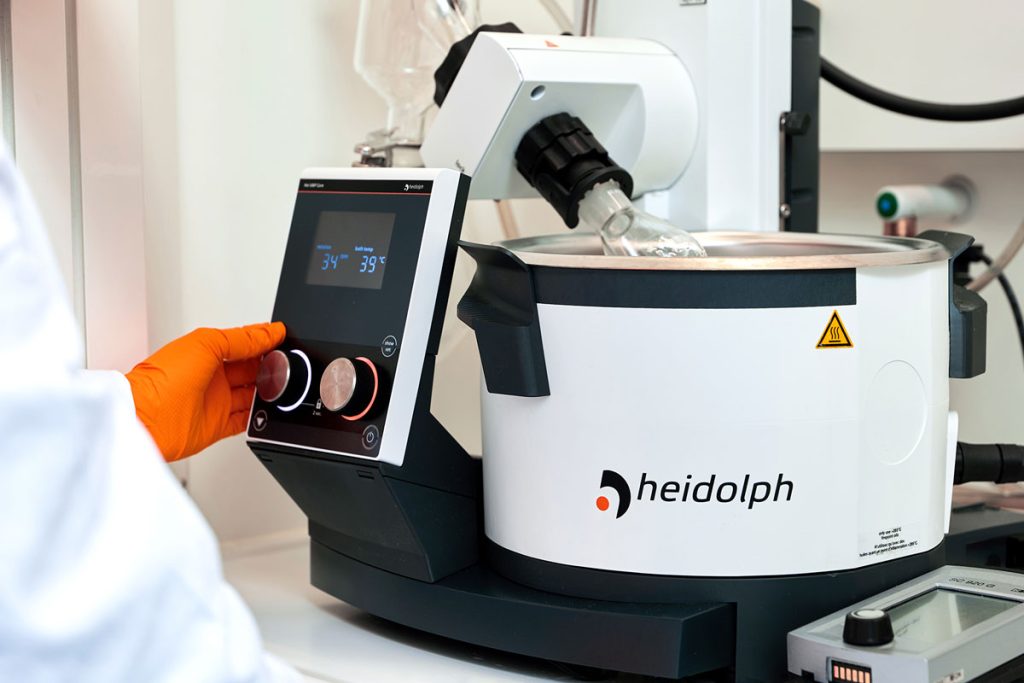
Optimizing solid-state properties and enhancing API bioavailability through physicochemical prediction
Whitepaper

Stable isotope-labeled compounds
Whitepaper
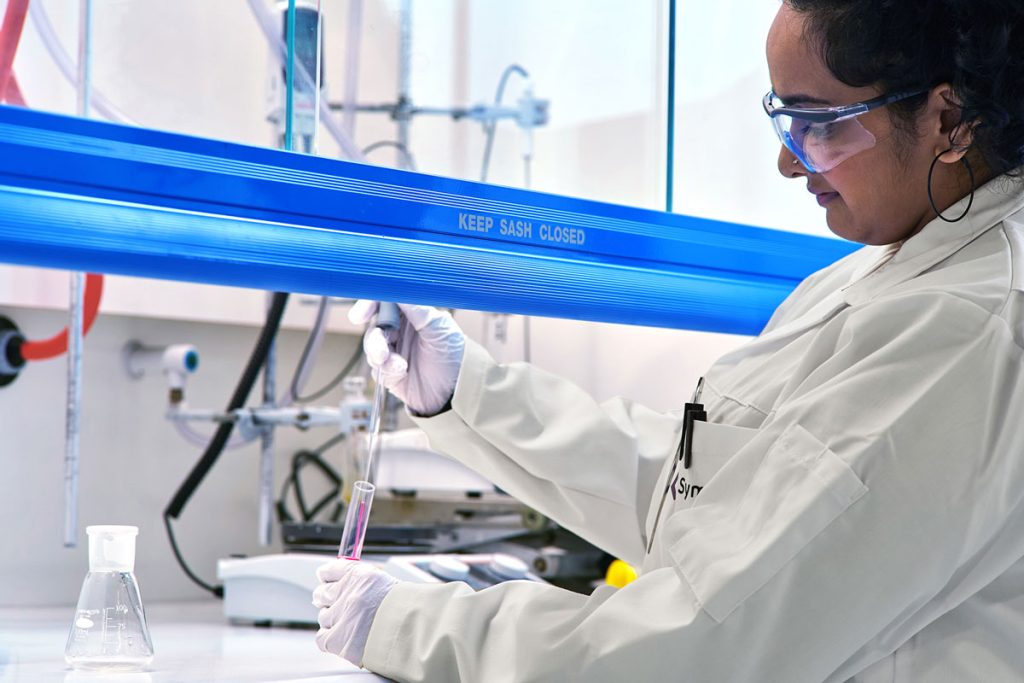
Unlocking the potential of high-throughput screening: Symegold library design and expansion insights
Interviews
Insights into drug discovery and development 2025
Interviews
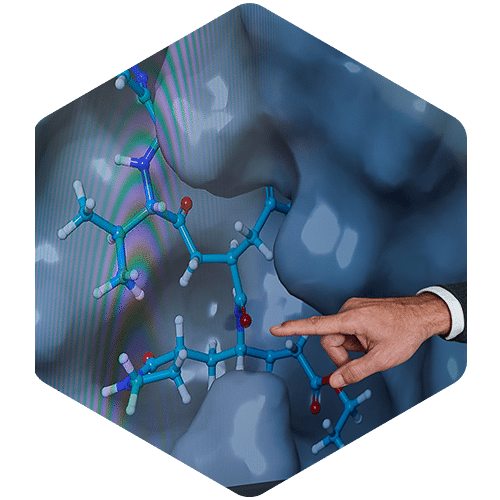
Interview with the computer-aided drug design (CADD) department
Interviews

Meet the Organix Director, Mario Gonzalez
Interviews

Interview with the new Managing Director of Symeres Groningen
Interviews
An interview with Yadan Chen and Paul O’Shea
Interviews

An interview with Anu Mahadevan and Paul Blundell
Blog
Crystalline and liquid crystalline 25-hydroxy-cholest-5-en-3-sulfate sodium and methods for preparing same
Webinar | On-demand
In vivo pharmacokinetic experiments in preclinical drug development
Webinar | On-demand
Accelerating medicinal chemistry by rapid analoging
Webinar | On-demand
Solid-state chemistry part II: Optimal form selection by controlled crystallization
Webinar | On-demand
Route scouting for kilogram-scale manufacturing of APIs
Webinar | On-demand
Solid-state chemistry part I: Introduction

Speak with our experts
Let’s discuss how Symeres can support the discovery and development of your next breakthrough