Lead optimization can stall for two reasons: either the right data has not yet been generated, or the available data has not been translated into a clear decision. In our experience, progress depends less on data volume than on decision clarity. At Symeres, lead optimization is treated first as a thinking problem and only then as a chemistry problem – a deliberate lead optimization strategy grounded in explicit decision-making. Before structures are drawn or assays scheduled, the central question is always the same: what decision will this next cycle enable?
That framing matters because optimization is fundamentally about narrowing options, since every program begins with multiple plausible directions but very limited certainty about which one will succeed. The job of lead optimization is to reduce that uncertainty until the residual risks are understood well enough to progress forward. Rather than define progress by how many compounds are made or how many assays are run, we recommend defining progress by whether the program becomes more predictable with each iteration.
Optimization begins with subtraction
In practice, effective optimization feels less like expansion and more like subtraction. Early discovery generates options quickly, while optimization exists to remove them. Series are narrowed, hypotheses are discarded, and liabilities are confronted directly rather than worked around. This is uncomfortable work, especially when resources allow exploration to continue. Yet most stalled projects share the same pattern, where the number of experiments increases but decision confidence does not.
From experience, the most expensive mistake in optimization is allowing work to continue without a clear sense of what outcome would justify stopping. If no realistic outcome of the next cycle would change the direction of the program, then further optimization is no longer creating value. At that point, activity is being maintained rather than progress made.
Deciding before designing
Every one of our optimization cycles begins with a decision. Sometimes the decision concerns biology: whether the phenotype is strong enough to justify further chemical risk. Sometimes it concerns chemistry: whether the scaffold can plausibly be tuned to meet exposure requirements. And sometimes it concerns strategy: whether the program’s remaining uncertainty is compatible with timelines or funding.
In practice, this way of working is often supported by familiar operational tools – design-make-test-analyze (DMTA) cycles, target or candidate profiles, and multi-parameter design frameworks. These structures help to organize work and make trade-offs explicit, but they’re only useful when they serve a clear decision. Without that anchor, even well-run cycles can increase output without increasing decision clarity.
Making the decision explicit changes how chemistry is approached. Instead of asking what can be synthesized next, the question becomes what data would actually resolve the uncertainty that matters most right now. That focus typically reduces the number of compounds proposed and sharpens the rationale behind each one, since only a few structures can answer the question that matters. It also makes negative data useful because it closes off directions that no longer need to be explored.
When SAR earn their keep
Structure-activity relationships (SAR) sit at the center of small-molecule lead optimization. At Symeres, SAR is not just accumulated but also used to determine which signals carry enough confidence to direct the next design cycle.
Actionable SAR clarifies the underlying mechanism and the predictability of response to structural change. A modification produces a consistent effect across related compounds, and that effect aligns with a plausible structural or physicochemical driver. As evidence accumulates, the behavior becomes reliable enough to inform prioritization rather than merely document outcomes.
Not every signal carries the same weight. A sharp potency gain that appears only in one assay format, yet disappears with minor structural variation or shifts under slightly different conditions may still be informative – but this calls for targeted, hypothesis‑driven follow‑up before it guides expansion. Distinguishing between robust and provisional signals is part of disciplined optimization.
At Symeres, SAR is treated as a decision tool. When trends become inconsistent or conditional, the response is not to expand chemical space indiscriminately, but to refine the underlying question. This preserves resources and keeps each design cycle focused on reducing uncertainty, not simply generating more data.
How potency is interpreted in context
Potency almost always attracts attention early, and for good reason – without sufficient activity, nothing else matters. As programs mature, however, potency data is read differently. Improvements are assessed alongside their consequences for exposure, clearance, solubility, and robustness. A gain in potency that compromises these factors may still be useful, but it changes the balance of risk rather than simply improving the molecule.
Over time, potency becomes less of an isolated target and more of a constraint within broader optimization steps. The key question shifts from how high activity can be pushed to whether the activity achieved is compatible with an exposure that can realistically be delivered. When that compatibility is absent, further potency optimization rarely resolves the underlying issue.
Interpreting ADME data without overreacting
ADME data exerts a strong influence over optimization decisions, partly because it appears objective and partly because it’s often framed as a gatekeeper. In reality, its value depends heavily on timing and context. Early assays are designed to flag major liabilities, not to predict clinical performance. Treating them as definitive too early can eliminate viable chemistry just as easily as ignoring them can preserve unworkable scaffolds.
The most difficult judgement is deciding whether a liability is intrinsic to the scaffold or contingent on current design choices. Some clearance or permeability issues persist regardless of modification, signaling a fundamental limitation. Others shift meaningfully with changes in lipophilicity, polarity or ionization, suggesting that redesign remains worthwhile. Distinguishing between the two requires looking for patterns over time rather than reacting to single readouts – especially when apparent signal can reflect assay boundaries, batch effects, or borderline properties rather than true chemistry.
This is why compound characterization follows predefined decision trees, with study depth increasing only when the next decision requires it. Variability also carries information. Highly variable pharmacokinetics (PK) or exposure often point to borderline properties that will matter later, even if mean values appear acceptable. In such cases, repeating assays without changing the underlying chemistry rarely improves confidence, but adjusting the design strategy does.
Blurring the boundary between hit-to-lead and optimization
Hit-to-lead and lead optimization are often treated as separate stages, but scientifically they follow the same logic. In both phases, the key question is simple: are we becoming more confident in how the molecule behaves?
The difference is not the objective, but the level of risk tolerated. Early on, broader uncertainty is acceptable. Later, expectations rise. Because this shift happens gradually, progression criteria should tighten stepwise rather than reset at an artificial stage boundary.
Rigid numerical thresholds can interrupt that continuity, while absolute values matter, direction and consistency matter more. A series that improves steadily while revealing its limitations may be easier to advance than one that occasionally meets benchmarks without becoming more predictable. Across both stages, consistent and interpretable behavior – not isolated metrics – supports better decisions.
Recognizing when to stop
Stopping work on a series is one of the most consequential decisions in lead optimization, and one of the hardest to make. The data rarely deliver certainty. Instead, it accumulates toward a point where further work is unlikely to change the outcome. Indicators include liabilities that remain stubborn despite focused redesign across multiple cycles, SARs that refuse to stabilize or improvements in one dimension that reliably degrade another that matters more.
The decision to stop does not imply failure. Instead, it reflects a judgement that resources will generate more value elsewhere. Programs that hesitate here often do so because of emotional investment or sunk cost rather than scientific rationale. Clear decision criteria, defined early, make this moment easier to recognize when it arrives.
What progress looks like in practice
This approach reflects how Symeres works with discovery teams. Decisions are made openly, with uncertainty discussed rather than hidden. Data that complicates the plan is surfaced early, not smoothed over later, and programs are allowed to change direction when evidence demands it.
That openness only works because teams are nimble enough to adapt without losing momentum and experienced enough to know which changes matter and which do not. Chemistry, biology and ADME capabilities create value only when they are applied at the moment a decision is being made.
Lead optimization succeeds when thinking stays ahead of activity. When judgement is explicit, plans remain flexible and expertise is applied in real time, progress follows naturally. Everything else is execution.
About the author
Dr. Anita Wegert is Director of Medicinal Chemistry at Symeres, where she leads medicinal chemistry programs supporting small-molecule drug discovery. She works closely with biotechnology and pharmaceutical partners to guide hit-to-lead and lead optimization strategies, helping translate complex SAR data into clear decisions that advance programs toward development.

Resources we think you'll love
Infographics
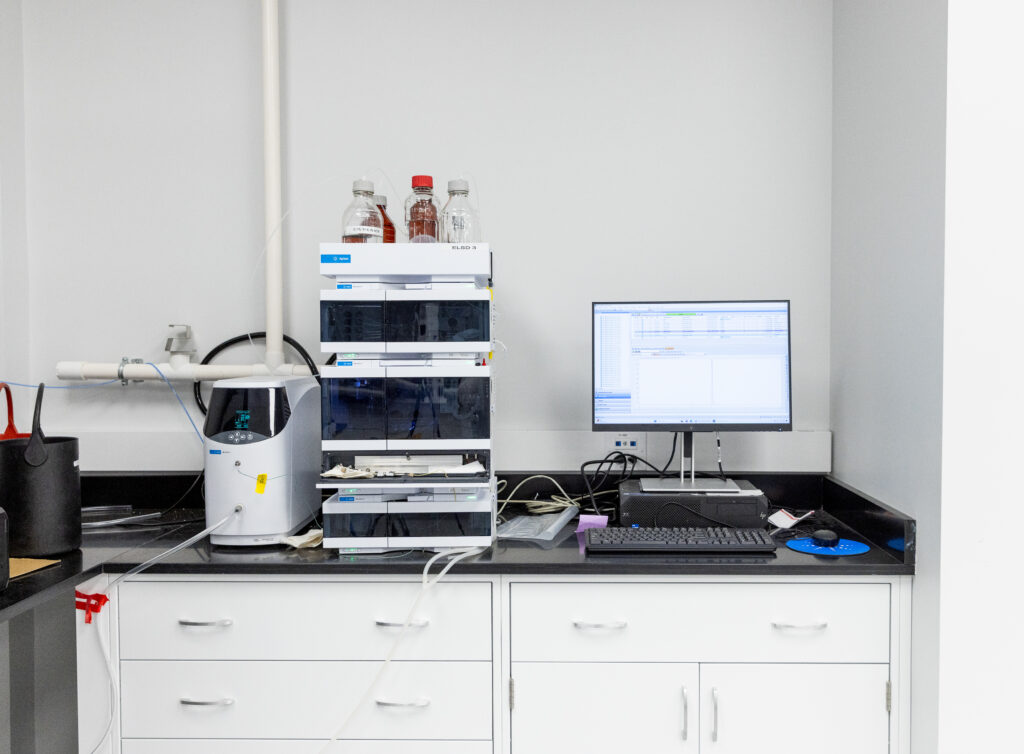
Map your molecule’s next move with the Symeres developability roadmap
Blog
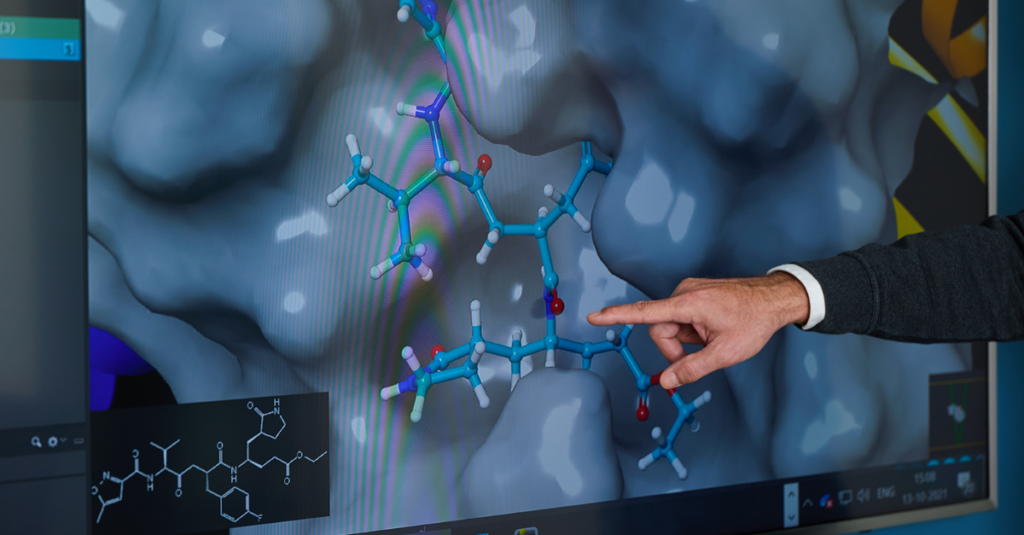
Three Signs Your Synthetic Route Will Collapse at Scale
Blog
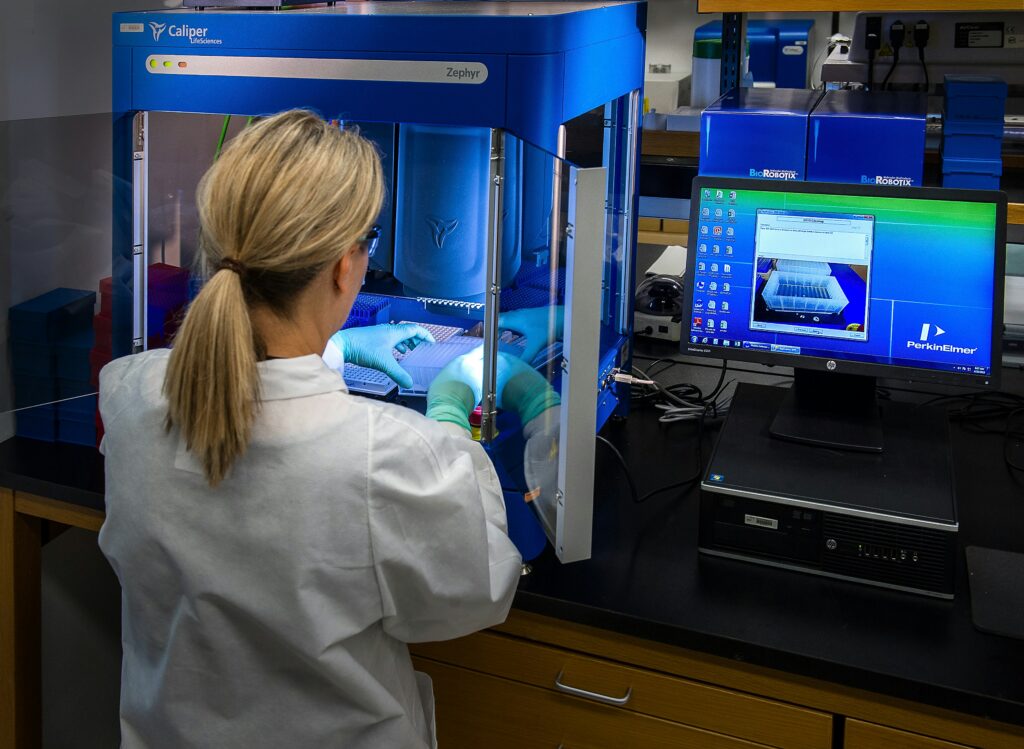
When slowing chemistry speeds programs up
Blog

When a clean PK profile is actually a warning sign
Blog

CDMO red flags you can’t ignore: Communication breakdowns
Blog

CDMO red flags you can’t ignore: Capacity constraints and resource stretch
Blog

CDMO red flags you can’t ignore: Regulatory shortfalls and misalignment
Whitepaper
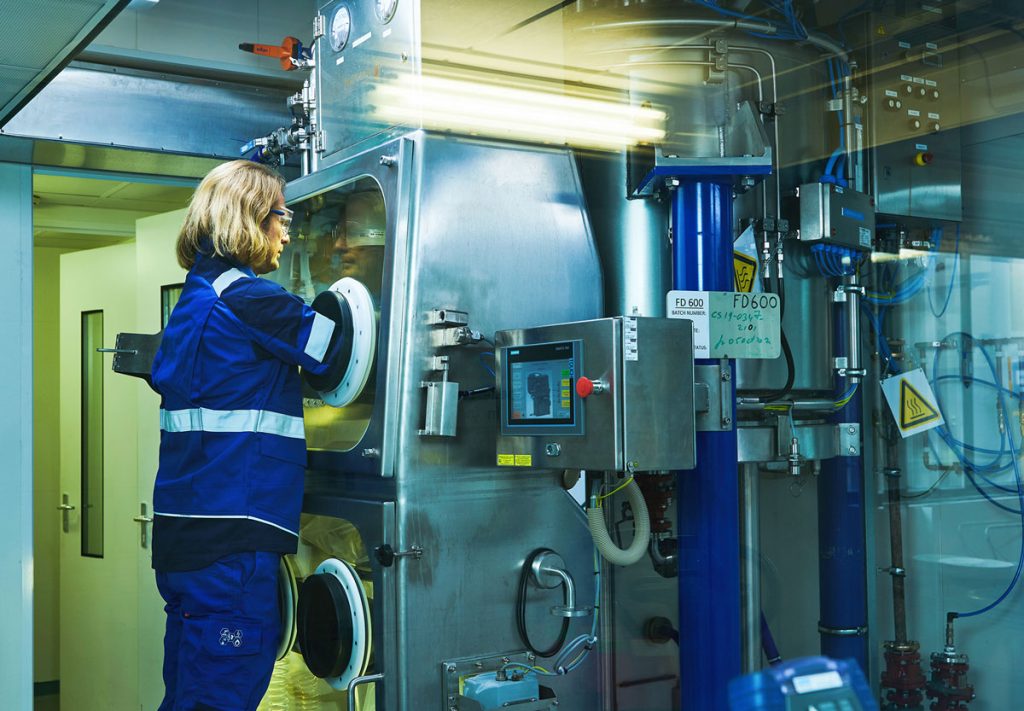
5 CDMO red flags you can’t ignore: A guide for biotechs and pharma
Blog

CDMO red flags you can’t ignore: Underestimating technology transfer complexity
Blog

O.N.E Symeres: A practical approach to real-world drug development
Blog

CDMO red flags you can’t ignore: Undefined or shifting project scope
Whitepaper
Accelerating chemical innovation: Unveiling Symeres’ parallel chemistry
Webinar | On-demand

From racemic to pure the art and science of enantiomer separation
Whitepaper

IND & IMPD enabling developability roadmap
Whitepaper

Innovations in unnatural amino acids: Advancing functional diversity and applications
Whitepaper

Leveraging copper-catalyzed ullmann-type cross-coupling reactions in PR&D
Whitepaper

Managing nitrosamines in the pharmaceutical industry: A comprehensive approach
Whitepaper
Optimizing solid-state properties and enhancing API bioavailability through physicochemical prediction
Whitepaper

Stable isotope-labeled compounds
Whitepaper
Unlocking the potential of high-throughput screening: Symegold library design and expansion insights
Interviews

Insights into drug discovery and development 2025
Interviews
Interview with the computer-aided drug design (CADD) department
Interviews

Meet the Organix Director, Mario Gonzalez
Interviews

Interview with the new Managing Director of Symeres Groningen
Interviews
An interview with Yadan Chen and Paul O’Shea
Interviews

An interview with Anu Mahadevan and Paul Blundell
Blog
Crystalline and liquid crystalline 25-hydroxy-cholest-5-en-3-sulfate sodium and methods for preparing same
Webinar | On-demand
In vivo pharmacokinetic experiments in preclinical drug development
Webinar | On-demand
Accelerating medicinal chemistry by rapid analoging
Webinar | On-demand
Solid-state chemistry part II: Optimal form selection by controlled crystallization
Webinar | On-demand
Route scouting for kilogram-scale manufacturing of APIs
Webinar | On-demand
Solid-state chemistry part I: Introduction

Speak with our experts
Let’s discuss how Symeres can support the discovery and development of your next breakthrough