Exemplify
Nuclear Magnetic Resonance (NMR) Spectroscopy is a powerful analytical tool well known to all organic chemists and to anyone that works in pharmaceuticals. By placing a sample dissolved in deuterated solvent into a strong magnetic field (roughly 4000x the strength of Earth’s magnetic field) and pulsing it with radio frequencies, the chemist is given an enormous amount of information from the identity and placement of functional groups to relative stereochemistry of diastereomers. Recently, Exemplify, a Symeres company, added NMR to our expanding list of capabilities.
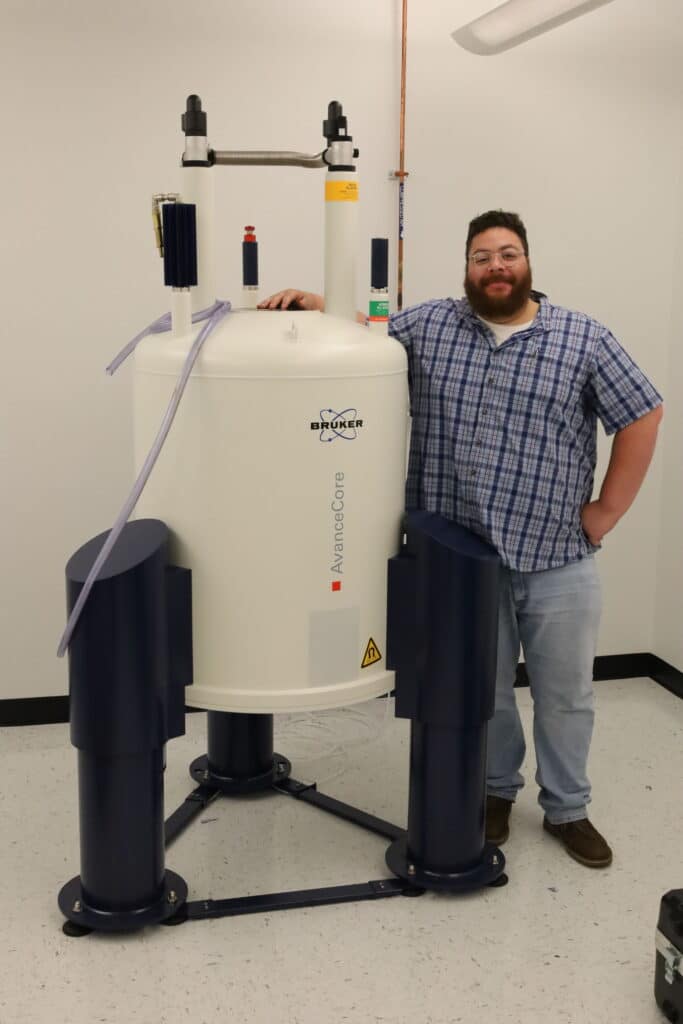
Meet EB-NMR-001, also known as “Maggie”, the Bruker© AvanceCore 400 MHz NMR recently installed at Exemplify! Maggie was acquired to enhance capabilities, reduce operating costs, and streamline process and analytical developments. Since the installation and charging of the magnet, the NMR has made an enormous splash within the organization. Having Maggie is crucial to operations, with quick results for detecting when certain precursors, impurities, and drug products lack chromophores or unique mass-spec signals.
After delivery, Bruker sent two teams of technicians to install, and then charge, the magnet. The magnet, which weighs close to a metric ton, was unboxed and moved into position with the help of a specialized tripod. Once the magnet was in place and the legs attached, the instrument had to be cooled to approximately 4 Kelvin (-269.15°C or -453.5°F) by purging the two cryogen dewars between the magnet and the shell with nitrogen, followed by filling the outer dewar with liquid nitrogen and the inner dewar with liquid helium (boiling point ~4 Kelvin). The NMR superconducting magnet was then charged by the second Bruker team by pushing an electric current through the supercooled magnet. The now-living magnet was ready for testing, including determination of signal to noise, sensitivity, and line-shape tests.
With a 580 S/N ratio, it only takes one scan to collect useful data on a moderately concentrated proton sample. The AvanceCore probe is dual-channel, which gives a wide variety of nuclei that can be observed. 1H proton, 13C carbon, 19F fluorine, and 31P phosphorus are probably the most useful nuclei in a pharmaceutical sense. Furthermore, there is a 2H deuterium and 15N nitrogen capabilities for the more difficult molecules. Two- and three-dimensional NMR experiments, both homo- and heteronuclear, are also available, and these experiments can be conducted on-site. We also have access to variable-temperature experiments, which have the potential to be used for observing rotation isomers of organic compounds and, when combined with 1D heteronuclear coupling experiments, may allow us to work with more difficult structures.
Aside from structure confirmation, Maggie will allow Exemplify to quickly identify impurities and side-products in our processes that would ordinarily take multiple instruments and time to identify. Now, more projects can be taken on with structures that are more difficult to see by other means and can quantify materials with +/- 4% accuracy. In the future, more capabilities can be added to an already extremely useful instrument. The AvanceCore setup has an available sample changer, which would allow up to 24 samples to be run automatically without the scientist’s intervention, further streamlining the operation. Additional probes may allow us to see other nuclei and to quantify reagents and regulatory starting materials with unique nuclei.
Latest news

Symeres achieves ISO 27001 certification, reinforcing commitment to information security

What are the top drug development trends for 2026? Exemplify CSO Paul O’Shea discusses what to watch

Symeres appoints Jurgen Berendsen as Chief Financial Officer

Symeres earns first SBTi approval as part of long-term sustainability journey

Symeres appoints Gabriella Gentile as Chief Operating Officer to drive transatlantic growth

Symeres announces acquisition of DGr Pharma

Symeres and Yoneda Labs use AI to optimize cross-coupling reactions
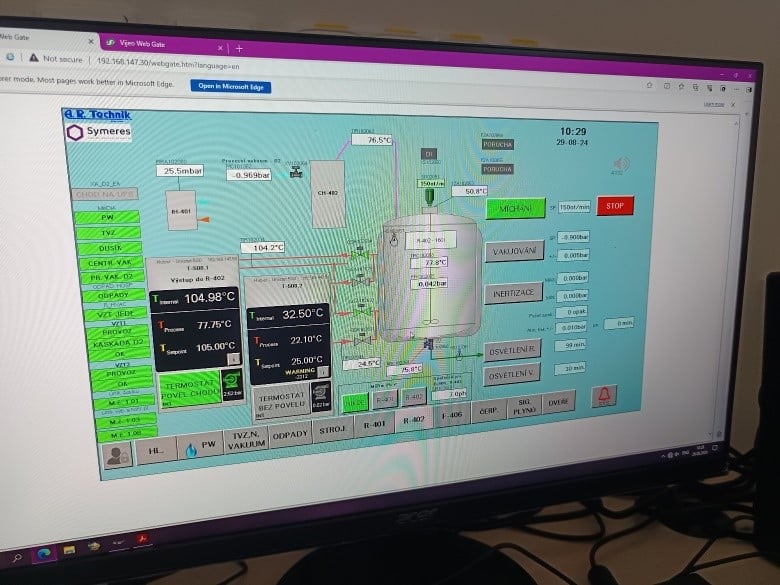
New production lines D1 and D2 at our Prague site

Symeres announces leadership evolution

Official opening of new Oncolines home, the Marie Curie Building at the Pivot Park in Oss, the Netherlands
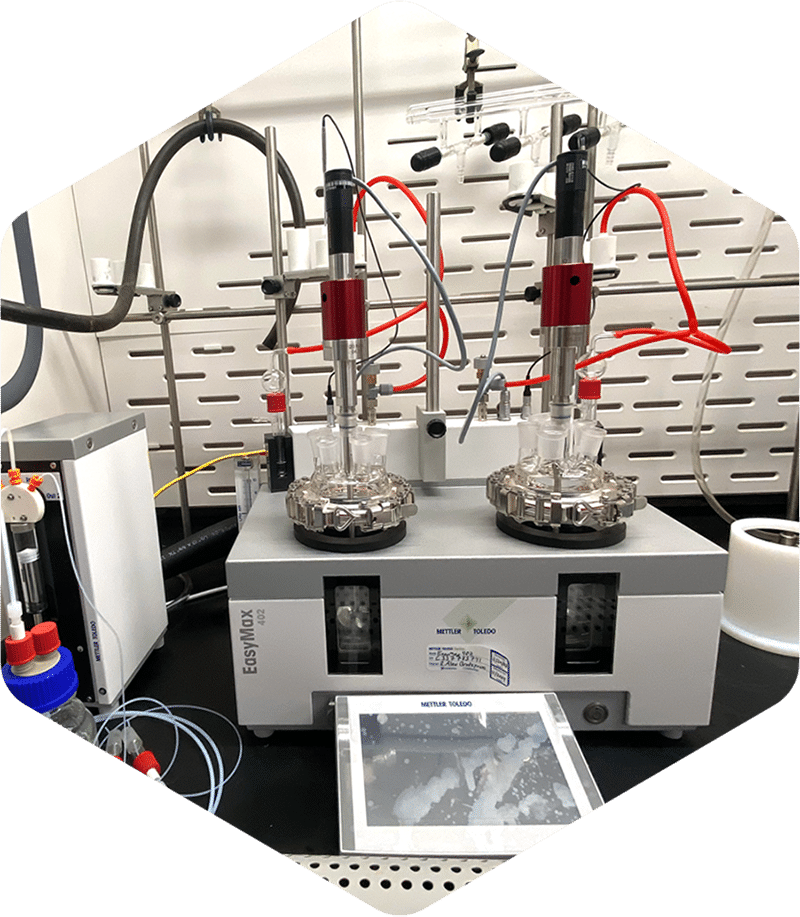
New equipment at Exemplify
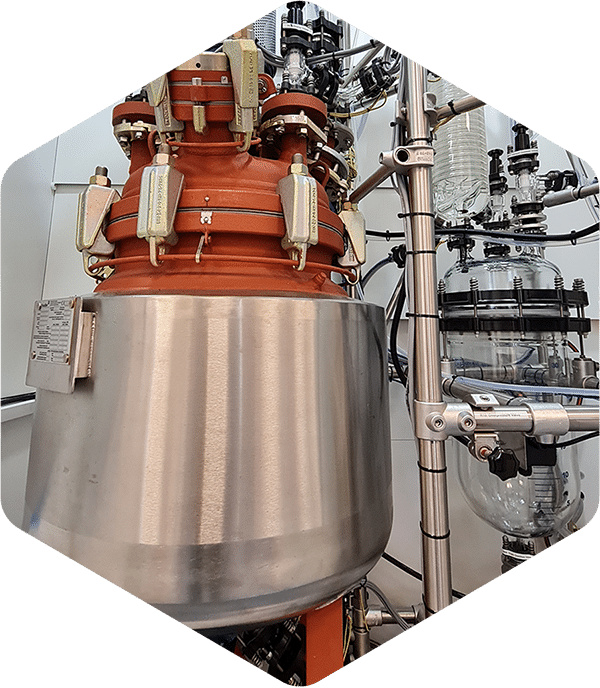
New 100 L vessels in Groningen

Organix: New facility

Innovative macrocycles as powerful Mcl-1 inhibitors

Oncolines unveils new state-of-the-art laboratories

Peter Molenveld assumes role as secretary of KNCV (Royal Netherlands Chemical Society)

Chiral chemistry: in the DNA of Symeres

π-facial selectivity in the Diels–Alder reaction of glucosamine-based chiral furans and maleimides

Symeres acquires Oncolines, further strengthening its drug discovery and biology capabilities

Symeres acquires Exemplify BioPharma, further strengthening its strategic foothold in the US
Expansion of solid-state center of excellence
Symeres acquires Massachusetts-based Organix Inc., adding lipids expertise and creating a strategic foothold in the US market
Expanding the toolbox: Resolving racemates

Symeres joins forces with Keensight Capital

Speak with our experts
Let’s discuss how Symeres can support the discovery and development of your next breakthrough